Cheswick's protest over cigarette rationing
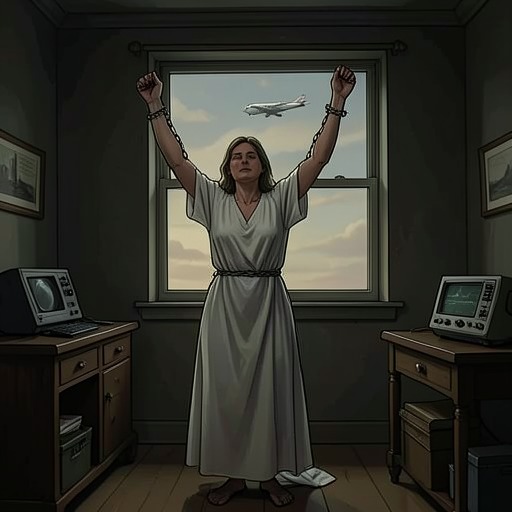
One Flew Over the Cuckoo's NestCheswick's protest over cigarette rationing is a ward meeting in which a demand for ordinary control over cigarettes turns, in a matter of moments, into a public test of solidarity. Cheswick asks McMurphy and the other Acutes to stand with him; their silence leaves him isolated, and the ward’s black aides forcibly remove him. Nurse Ratched then returns the room to its scheduled business, while Chief Bromden’s account makes the cost of that restored order visible in the faces left behind and in the oppressive light overhead.
Background and Stakes
The confrontation follows a sharp change in Cheswick’s conduct. The previous day, he had surprised the ward by rising early to polish the latrine until it sparkled and then working on the hall floors at the request of the ward’s black aides. Nurse Ratched treated his industriousness as unsurprising. The next afternoon, the question is not whether Cheswick will work but whether he can make his own demand heard: he says that everyone has agreed there should be a showdown over the cigarette situation and appeals to McMurphy for backing.
The stakes in the room are defined by Cheswick’s insistence that he is not a child whose cigarettes can be withheld like cookies. His comparison gives the rationing dispute its particular force: he frames it as an affront to adult agency, not simply as a disagreement over supplies. Yet the meeting offers no visible mechanism for turning that grievance into action. Cheswick’s appeal depends on other patients answering him, and the scene makes their response—or refusal to respond—the decisive turn.
The Protest and Its Collapse
Cheswick calls to McMurphy, but McMurphy does not look up. In his corner, he studies the cards sliding in and out of his hands; in the quiet, the slap of the greasy cards and Cheswick’s heavy breathing are all Bromden can hear. The contrast is exact and unsettling: Cheswick asks for collective action while McMurphy attends to a one-handed card cut. The others look toward McMurphy too, making his silence conspicuous, but no one intervenes.
Cheswick renews his demand, then stamps his foot and looks around as if lost. With both fists clenched against his chest, he searches the Acutes for help. He is short and heavy, with a bald spot at the back of his head; standing alone in the middle of the day room, he seems smaller still. Each man looks away rather than backing him, and Bromden observes the panic on Cheswick’s face doubling as the search continues. His gaze eventually reaches Nurse Ratched. The repeated demand—“I want something done!”—breaks apart before he can finish it.
The ward’s black aides clamp his arms from behind, and one of them throws a strap around him. Cheswick sags as they drag him up the steps to the Disturbed Ward; Bromden hears the soggy bounce of his body on the way up. The physical handling abruptly replaces the exchange of arguments. Cheswick’s protest does not secure an answer about cigarettes; it ends with his removal from the meeting.
The Meeting Resumes
After the aides return and sit down, no one speaks. Nurse Ratched turns to the line of Acutes and asks whether there is any more discussion about cigarette rationing. The question restores the meeting’s formal routine, but the silence that follows Cheswick’s removal gives that routine a changed meaning: the protest has been ended through force, not answered through discussion. The sequence places the nurse’s calm procedural question directly after the sound and sight of Cheswick being taken away.
Bromden’s attention moves from the row of faces hanging against the wall to McMurphy, still concentrating on his card cut. The faces seem canceled, and the fluorescent tubes begin pumping refrigerated light again; Bromden feels their beams reaching into his stomach. His closing perception links the meeting’s outward return to normal with the bodily pressure he experiences in the ward. The room is quiet and the agenda continues, but the protest has exposed how little support Cheswick can command when he asks for it—and how quickly the ward’s authority can resume once he is gone.
Narrative Significance
The scene’s progression—from a claim of shared agreement, through an appeal for a champion, to solitary panic and restraint—makes solidarity the immediate measure of the protest’s failure. Cheswick does not begin alone: he says the patients have agreed that the cigarette situation requires a showdown. But when the moment comes to act, the other Acutes look away, and McMurphy’s silence leaves the demand without the backing Cheswick expected. The event therefore distinguishes a stated consensus from support that can withstand the pressure of a public confrontation.
Bromden’s narration also keeps the focus on the concrete signs of power: the cards that continue moving through McMurphy’s hands, the men who avert their eyes, the strap, the steps to the Disturbed Ward, and the nurse’s immediate return to the cigarette question. No resolution of the rationing dispute is reported in this episode. Instead, its ending is the renewed meeting and Bromden’s sense of the lights bearing down on him, an image that makes the apparent restoration of order feel less like a settlement than a return to control.